Scam guide
AI Voice Cloning
A caller may sound like someone you know and pressure you to send money or keep a secret.
Who this helps
Families, older adults, and anyone who receives urgent phone calls.
How AI voice cloning scams usually create pressure
AI voice cloning scams often begin with a phone call, voicemail, or short audio message that appears to come from a family member, friend, coworker, or other trusted person. The caller may sound upset, embarrassed, rushed, or afraid. That emotional pressure is the point: the story is designed to make you act before you have time to verify.
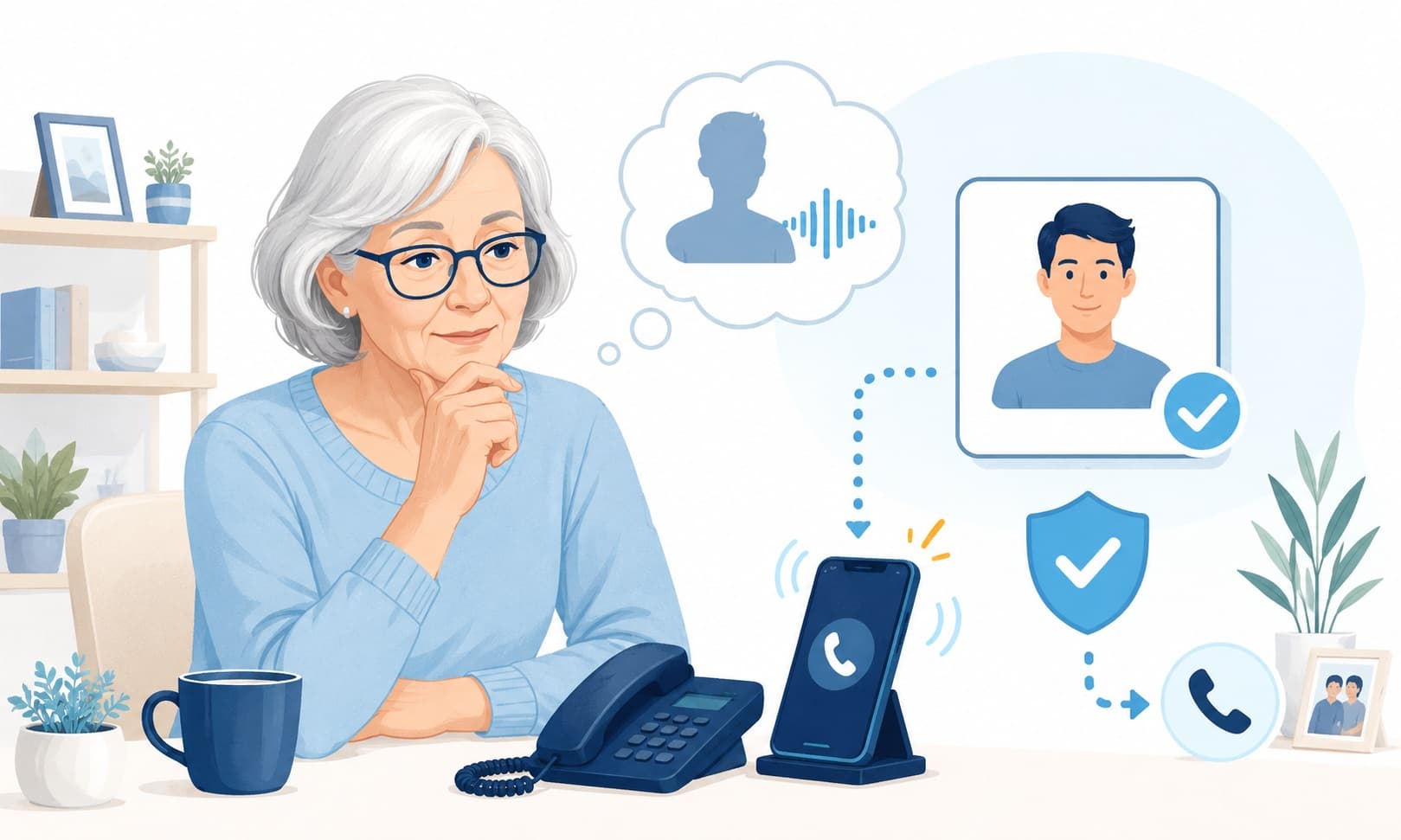
These scams commonly involve urgent money requests, secrecy, and a reason the person supposedly cannot talk normally. A voice that sounds familiar is not proof by itself. A safer response is to hang up, call the person back using a known number, contact another trusted person, and use a family code word or private verification question before sending money or sharing information.
What this scam looks like
A voice cloning scam may sound like a child, grandchild, parent, coworker, or friend saying they are in trouble. The voice may be short, emotional, or hard to hear. The story often includes an emergency, accident, arrest, hospital visit, lost phone, or urgent need for money.
The caller may ask you not to contact anyone else because they feel embarrassed or afraid. Sometimes another person joins the call and claims to be a lawyer, police officer, doctor, or helpful stranger. The goal is to keep you on the call long enough to send money before you can verify through a separate channel.
Common examples
- A caller sounds like a grandchild and says they were in an accident.
- A voice message claims a family member lost their phone and needs money.
- Someone says a loved one is in jail and a payment must be made quickly.
- A caller asks for gift cards, wire transfer, crypto, or a payment app transfer.
- A person says not to tell anyone else because it would make things worse.
How to verify safely
- Hang up and call the person using a saved number or known contact method.
- Use a family code word or a private question that a stranger would not know.
- Contact another trusted family member before sending money.
- Do not rely on caller ID, voice alone, or emotional urgency as proof.
- If someone claims to be an official, find the official contact path yourself.
Warning signs
- The caller asks for money, gift cards, crypto, or wire transfers right away.
- You are told not to contact anyone else.
- The story creates fear, shame, or urgency.
- The caller refuses a simple verification question.
Questions to ask
- Can I call this person back using a number I already know?
- Would this person normally ask me to keep a money problem secret?
- Can another trusted family member verify the situation?
Safer next steps
- Hang up and call the person directly using a saved contact or known number.
- Use a family code word or a personal question that a stranger would not know.
- Do not send money until you verify through another channel.
What to do if you already clicked, paid, or shared information
- Stop sending money or information until you verify through a separate channel.
- Contact the relevant bank, platform, employer, or agency through an official channel.
- Save call times, phone numbers, messages, payment details, and any instructions you received.
- Talk with a trusted person so you do not have to handle follow-up pressure alone.
- Be cautious of anyone who contacts you later claiming they can recover the money for a fee.
How to report it
- Report suspicious calls or messages through your phone provider or platform when available.
- Report payments through the bank, card provider, wire service, or payment app used.
- Use official consumer-protection or fraud-reporting channels in your region.
- Visit the site's /reporting page for general reporting options.
Common questions
Can someone fake a family member's voice?
Yes, voice imitation tools can make a short call or message sound familiar. Treat the voice as one signal, not proof by itself.
What should I do if a caller sounds like my grandchild?
Hang up and call your grandchild or another trusted family member using a known number before sending money or sharing information.
Should my family use a code word?
A family code word can help slow down urgent calls. Choose something private, easy to remember, and not posted online.
What if the caller says not to tell anyone?
Secrecy is a warning sign. Contact someone you trust through a separate channel before acting.