Scam guide
Fake Check Scam
Learn how fake check scams use overpayments, job supplies, prizes, and refunds to make people send real money back.
Who this helps
This guide helps job seekers, sellers, renters, students, freelancers, and anyone asked to deposit a check from someone unfamiliar.
How Fake Checks Turn Waiting Time Into Risk
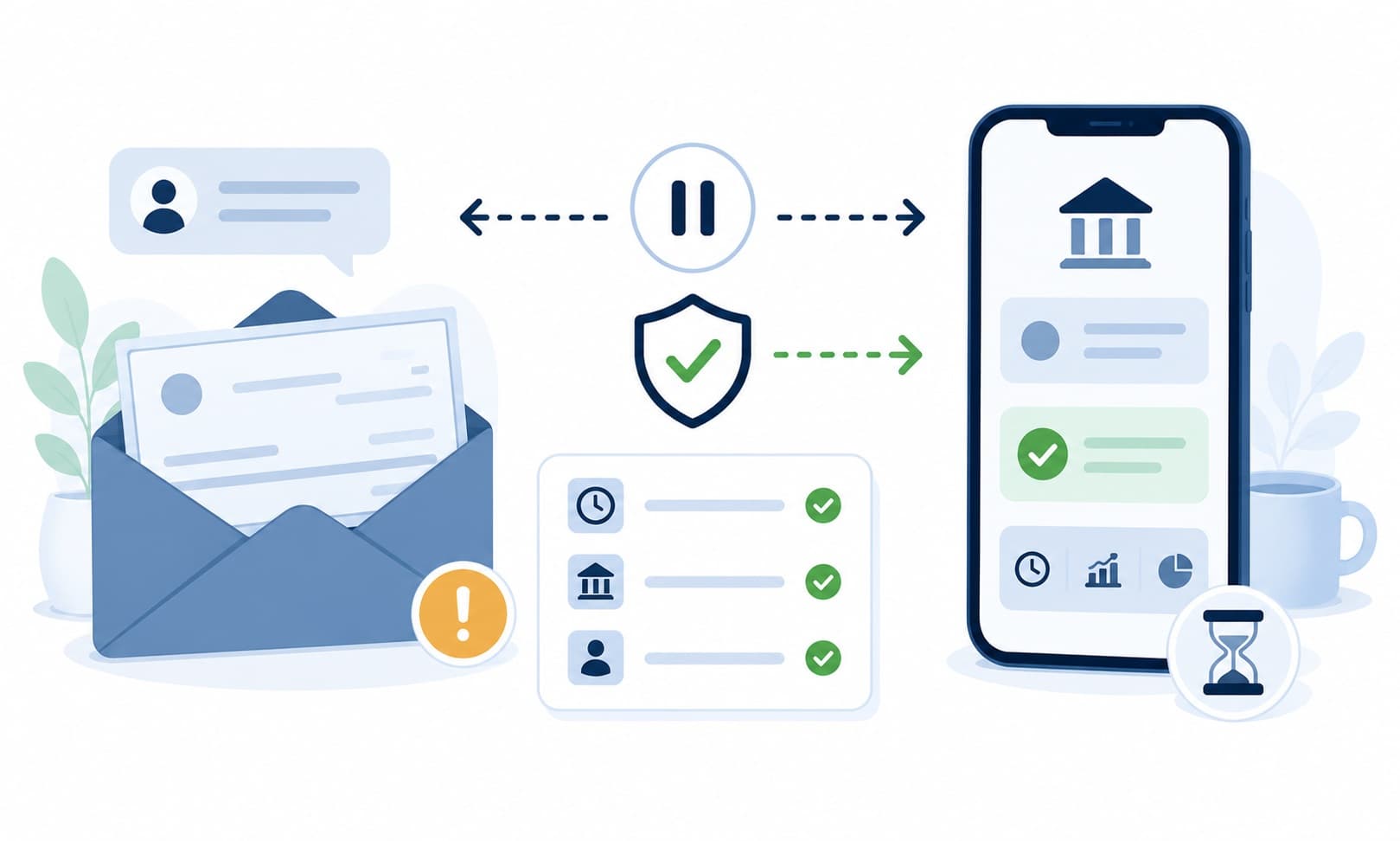
A fake check scam can feel confusing because a deposit may appear in an account before everything is fully settled. The sender uses that window to create pressure. They may say they accidentally overpaid, need you to buy work equipment, want you to send money to a shipper, or need fees paid for a prize. The check creates a feeling that the money is already there, while the request asks you to send real money out quickly.
The safest response is to pause before spending, forwarding, refunding, or moving money connected to an unfamiliar check. Contact your bank through an official channel and explain the situation in plain language. Do not rely on the sender's instructions. A real employer, buyer, or organization should not need you to handle money in a confusing way before you have verified the relationship and the payment.
What this scam looks like
A fake check scam may come from an online buyer, remote job contact, prize notice, grant message, refund offer, or rental inquiry. The person sends a check and then asks you to send some money elsewhere. The story may sound practical: shipping, supplies, fees, taxes, assistant tasks, or accidental overpayment.
The pressure often comes after the check is deposited. The sender may say the payment is visible, so you should act now. They may become impatient if you want to wait or speak with your bank. The key warning sign is being asked to send money, gift cards, or payments because of a check from someone you do not already trust.
Common examples
- An online buyer sends a check for too much and asks you to refund the difference.
- A remote job sends a check for office equipment and tells you where to buy it.
- A prize notice sends a check but asks you to pay taxes, fees, or processing costs.
- A renter sends a deposit check and asks you to forward part of it to someone else.
- A fake refund offer sends a check and asks for a return payment through another method.
- A stranger asks you to deposit a check and send money to a shipper or assistant.
How to verify safely
- Contact your bank through an official channel before moving money from an unfamiliar check.
- Verify the employer, buyer, prize, or organization through a separate official website or known contact method.
- Do not use contact information supplied only by the person who sent the check.
- Ask why the check involves extra money or a third-party payment.
- Wait and get clear guidance from your bank before spending or forwarding funds.
- Be cautious if the sender becomes angry, rushed, or overly complicated.
- Ask a trusted person to help review the messages and payment instructions.
Warning signs
- Someone sends a check for more than expected and asks you to send back the extra money.
- A job, prize, or refund requires you to deposit a check before you have verified the source.
- You are told to buy supplies, gift cards, equipment, or services using money from the check.
- The sender pressures you to act before the bank has fully reviewed the deposit.
- The situation began with a stranger, online buyer, remote job, or unexpected award.
- The person gives complicated instructions about who should receive part of the money.
Questions to ask
- Do I know and trust the person or organization that sent this check?
- Why is the check for more than the agreed amount?
- Am I being asked to send money, gift cards, or payments before the check is fully resolved?
- Can I verify the job, buyer, prize, or refund through an official channel?
- Does this request make sense without the check?
Safer next steps
- Do not send money back from a check before verifying the situation carefully.
- Speak with your bank through an official channel if a check or deposit seems unusual.
- Be cautious with checks from online buyers, new employers, prize contacts, or strangers.
- Do not buy gift cards, equipment, or supplies because a stranger sent a check.
- Keep the check, envelope, messages, and instructions for your records.
- Ask a trusted person to review the situation before moving or spending deposited funds.
What to do if you already clicked, paid, or shared information
- Stop sending money and do not follow any more payment instructions from the sender.
- Contact the relevant bank, platform, employer, or agency through an official channel.
- Tell your bank what happened and share the check and payment instructions if asked.
- If you sent money through a platform, contact that platform through its official support tools.
- Save messages, check images, envelopes, receipts, usernames, and dates for your records.
- If the situation involved a job or marketplace, report the profile or listing through the platform.
- Be cautious of recovery messages that promise to get the money back for an upfront fee.
How to report it
- Report the check and messages to your bank through an official channel.
- Report the job post, buyer profile, prize message, or marketplace listing on the platform where it appeared.
- Use official consumer-protection or fraud-reporting channels in your region.
- Report suspicious payment accounts through the payment service used.
- Visit the site's /reporting page for general reporting options.
Common questions
What should I do if someone sends me a check and asks for money back?
Pause before sending anything. Contact your bank through an official channel and explain the full situation, including the sender's instructions.
How can I tell if a check is fake?
You may not be able to tell by looking at it. Be cautious if the check comes from someone unfamiliar and they ask you to send money elsewhere.
Is it safe if the deposit shows in my account?
A visible deposit does not always mean the situation is fully resolved. Ask your bank through an official channel before spending or forwarding the money.
Why would a job send me a check for equipment?
Some fake job scams use checks for supplies or equipment. Verify the employer through an official channel before depositing or spending any money.
What should I do if I already sent money from a check?
Stop communicating with the sender, save all details, and contact your bank and payment platform through official channels to ask about available options.