Scam guide
Fake Marketplace Listing
Learn how fake listings use low prices, rushed deposits, copied photos, and off-platform messages to pressure buyers or sellers.
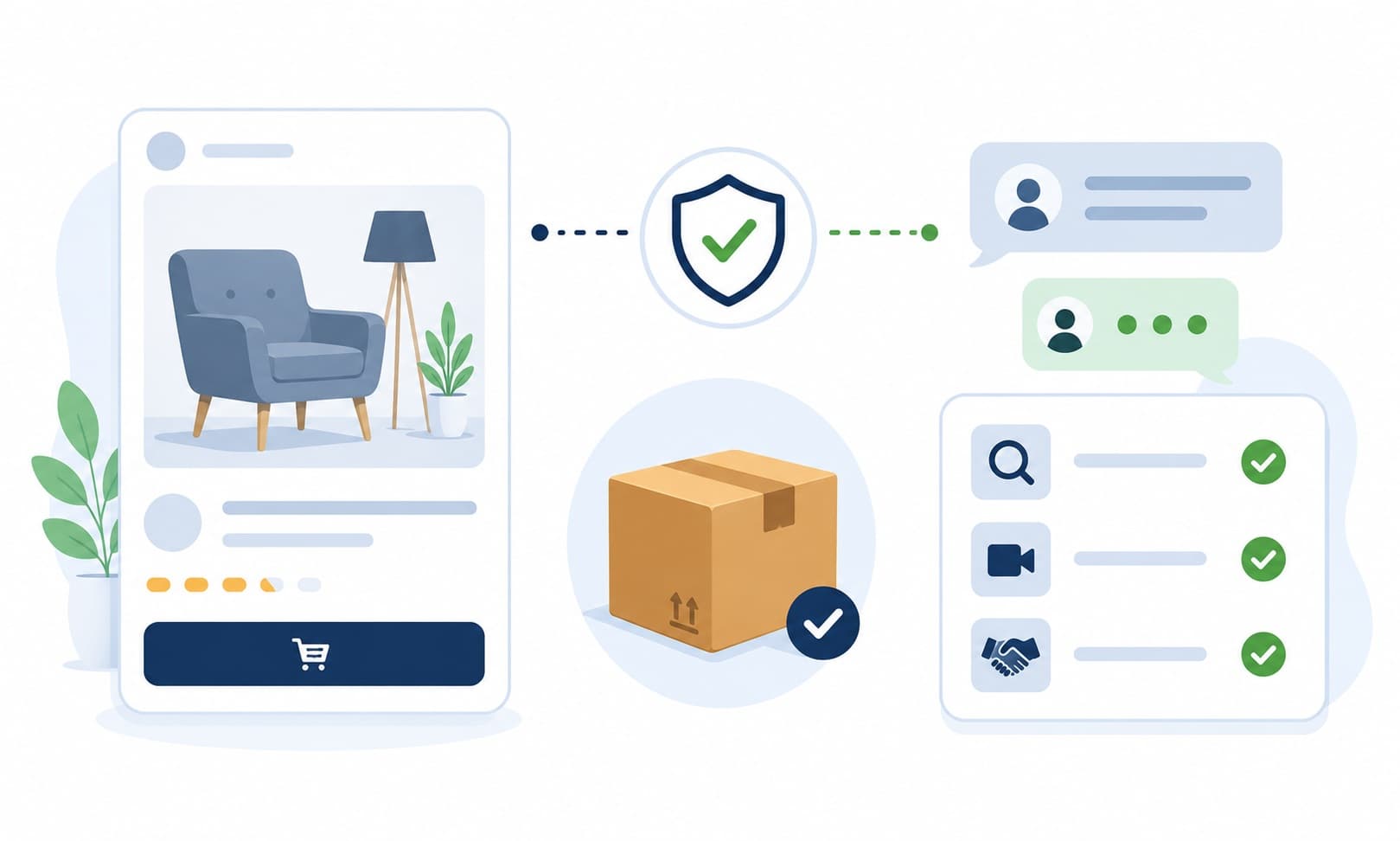
Who this helps
This guide helps online buyers, sellers, renters, parents, students, and local community marketplace users.
How Fake Listings Make Good Deals Feel Urgent
Fake marketplace listings often begin with something people already want: a used car, apartment, concert ticket, furniture deal, rental, pet, tool, or local service. The listing may look normal and use friendly messages. The pressure usually appears after you show interest. The person may say the item will go to someone else unless you send a deposit, move to a different app, or pay in a certain way. A good deal can make caution feel like a missed opportunity.
A safer approach is to separate interest from payment. You can like an item and still pause. Use the marketplace's normal messaging, payment, review, and reporting tools when they exist. Ask clear questions. Compare prices and photos. Avoid sending money, identity documents, or account codes before you have verified the situation through a safer channel. A legitimate seller or buyer should not need you to ignore basic checks.
What this scam looks like
A fake marketplace listing may use copied photos, a low price, a friendly story, or a believable local location. The person may say they are moving, traveling, handling the sale for someone else, or dealing with many interested buyers. For rentals or tickets, they may claim access is limited but a deposit will hold your spot.
Scams can target buyers and sellers. A buyer may send a fake payment notice, claim they overpaid, or ask you to use a shipping or pickup service. A seller may ask for money before you can inspect the item. In both cases, the safest move is to stay on the platform and verify before exchanging money or private information.
Common examples
- A rental listing asks for a deposit before any safe viewing or verification.
- A ticket seller says the event is almost sold out and wants immediate payment.
- A used vehicle listing is far below market price and the seller avoids basic questions.
- A pet listing asks for transport fees before providing reliable verification.
- A buyer sends a fake payment confirmation and asks you to ship the item.
- A seller asks to move the conversation to text or another app right away.
- A listing uses photos that look copied from another website or region.
How to verify safely
- Use the marketplace's built-in messaging and payment tools when available.
- Compare the price with similar listings in the same area.
- Ask for details that a real seller or buyer should know, without sharing private information.
- Be cautious if the person refuses normal platform steps or safe verification.
- Do not pay deposits through outside payment methods before you can verify the listing.
- For rentals, tickets, or high-value items, use official platform or venue channels when possible.
- Ask a trusted person to review the listing and messages before you send money.
Warning signs
- The price is much lower than similar listings without a clear reason.
- The seller asks for a deposit before you can see the item, apartment, ticket, or pet.
- The person wants to move the conversation away from the marketplace or platform.
- The listing uses polished photos but gives vague answers to simple questions.
- The seller or buyer creates urgency by saying many people are interested right now.
- You are asked to pay with a method that does not fit the platform's normal process.
Questions to ask
- Can I see the item, place, ticket, or proof through the platform's normal process?
- Does the price make sense compared with similar listings?
- Is the person pushing me away from the marketplace's built-in messaging or payment tools?
- Can I verify the seller, buyer, location, or ownership through a separate channel?
- Am I being asked to pay before I have enough information?
Safer next steps
- Stay inside the marketplace's messaging and payment tools when available.
- Do not send a deposit before verifying the listing through a safer, separate process.
- Compare the listing price, photos, and wording with similar listings.
- Ask specific questions and be cautious if the answers stay vague.
- Do not share private documents, codes, or financial details to prove interest.
- Ask a trusted person to review the listing before paying or sharing information.
What to do if you already clicked, paid, or shared information
- Stop sending money, documents, or additional messages to the account.
- Contact the relevant bank, platform, employer, or agency through an official channel.
- Report the listing or account through the marketplace's official reporting tools.
- If you paid, ask your bank or payment platform what options may be available for that payment type.
- Save the listing, messages, profile, payment details, and dates for your records.
- If you shared account login or private documents, use the official platform or agency channel to ask about next steps.
- Watch for follow-up messages claiming they can fix the problem for another fee.
How to report it
- Report the listing, profile, or conversation through the marketplace's official tools.
- Report suspicious payments through your bank or payment platform using official channels.
- Use official consumer-protection or fraud-reporting channels in your region.
- If copied photos or impersonation are involved, report them to the platform where they appear.
- Visit the site's /reporting page for general reporting options.
Common questions
How can I tell if a marketplace listing is fake?
Look for pressure, unusually low prices, vague answers, copied-looking photos, off-platform payment requests, and requests for deposits before verification.
Should I send a deposit to hold an item?
Pause before sending a deposit. Verify the listing, seller, and platform process first, especially if you cannot inspect or confirm the item.
What should I do if a seller wants to move off the platform?
Be cautious. Staying inside the marketplace's messaging and payment tools can provide clearer records and reporting options.
Can buyers also run marketplace scams?
Yes. Some fake buyers send false payment notices, claim overpayment, or ask sellers to ship before payment is verified through the platform.
What should I do if I already paid for a fake listing?
Save the listing and messages, report the account on the marketplace, and contact your bank or payment platform through an official channel.