Scam guide
Government Impersonation Scam
Learn how fake agency messages use official-sounding language to pressure people into paying, sharing information, or calling back.
Who this helps
This guide helps families, seniors, immigrants, students, and small-business owners who receive unexpected agency-like messages.
How Official-Sounding Messages Create Fear
Government impersonation scams use the weight of authority. A caller, email, letter, or text may claim there is a tax issue, immigration problem, unpaid fine, missed court notice, benefits review, or identity concern. The message may sound formal and may use agency names, seals, or legal-sounding phrases. The goal is not to help you understand the issue. The goal is to make the situation feel so urgent that you pay, click, call back, or share private information before checking through a separate official channel.
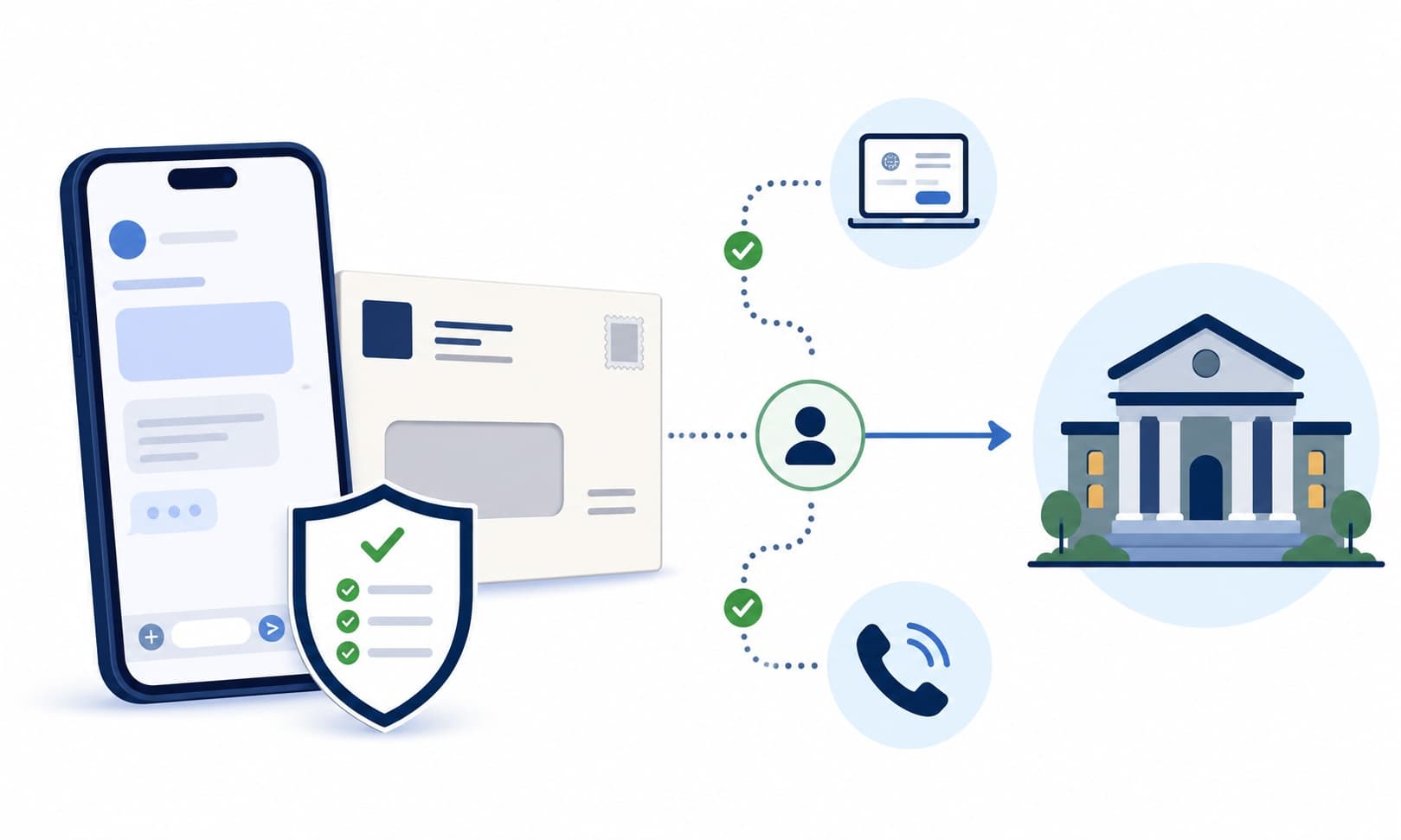
You do not have to handle an official-sounding message alone. Pause and verify using an official website, known phone number, mailed notice you already trust, or a community resource that helps people navigate public services. Do not rely on the contact information inside the unexpected message as proof. A real agency issue should be checkable through normal official channels. If someone tries to keep you on the phone, threatens you, or says secrecy is required, treat that as a reason to slow down.
What this scam looks like
A government impersonation scam may arrive by phone, text, email, mail, direct message, or search result. The message may claim you owe money, missed a deadline, must renew a benefit, or need to confirm your identity. It may use official-sounding job titles or department names. Some messages include links to forms that ask for personal details, copies of documents, or payment information.
The pressure may be direct or subtle. Some callers threaten arrest, fines, loss of benefits, or other serious outcomes. Others say they are helping you avoid trouble if you act now. The safest response is not to argue with the person. Instead, leave the conversation and verify through a separate official channel.
Common examples
- A caller says there is a warrant or legal problem unless you pay immediately.
- A text says your benefits will stop unless you confirm personal information through a link.
- An email says you owe a government fee and must pay with an unusual payment method.
- A message claims your identification number has been used in a crime.
- A fake agency letter includes a phone number that does not match the official website.
- A caller claims to help with immigration, taxes, permits, or benefits but pressures you to act quickly.
How to verify safely
- Search for the official agency website yourself instead of using links in the message.
- Use contact information from an official website, prior trusted notice, or official account portal.
- Ask whether the issue appears in your official account or written record.
- Do not share private documents or identification numbers through an unexpected message.
- Ask a trusted person or community support organization to review the message with you.
- Be cautious of payment methods that are unusual for official government business.
- Take notes, but do not debate or confront the caller.
Warning signs
- The message claims to be from a government office but demands immediate payment or information.
- You are threatened with arrest, benefits loss, fines, deportation, or account closure if you do not act now.
- The sender asks for payment through gift cards, payment apps, cryptocurrency, wire transfer, or unusual methods.
- You are told to keep the matter secret or not contact anyone else.
- The caller refuses to let you hang up and verify through an official website or known number.
- The message asks for personal identification details through an unexpected link, call, or text.
Questions to ask
- Did this agency contact me through a normal official process I recognize?
- Can I find the notice by going directly to the official agency website?
- Is the person asking for payment in a way a government office would not normally use?
- Am I being threatened or rushed before I can verify?
- Can I ask a trusted person to help me check the message?
Safer next steps
- Do not use links or phone numbers from the unexpected message.
- Go directly to the official agency website or use a known contact method.
- Pause before sharing identification numbers, account details, or private documents.
- Do not pay with gift cards, payment apps, cryptocurrency, or other unusual methods because someone demanded it.
- Ask a trusted person, community organization, or official support channel to help you verify.
- Save the message, letter, or call details for reporting if needed.
What to do if you already clicked, paid, or shared information
- Stop communicating with the sender and do not send additional payments or documents.
- Contact the relevant bank, platform, employer, or agency through an official channel.
- Use the official agency website or known number to ask whether there is a real notice or account issue.
- If you shared identity documents or personal numbers, ask the official agency what general account or record options may be available.
- If you paid, contact the payment provider or bank through an official channel to ask about the transaction.
- Save messages, letters, receipts, links, and call details for your records.
- Ask a trusted person to help you organize the information before reporting.
How to report it
- Report the impersonation to the real agency through its official reporting channel if available.
- Use official consumer-protection or fraud-reporting channels in your region.
- Report the message through your email, phone, social media, or payment platform when available.
- Visit the site's /reporting page for general guidance on where reports may fit.
- If the message targeted a workplace, tell the appropriate internal contact through a separate trusted channel.
Common questions
What should I do if a government agency calls and threatens me?
Pause and do not pay or share information during the call. Use an official website or known number to verify whether there is a real issue.
How can I tell if a government email is real?
Do not rely on the email alone. Go directly to the official agency website or account portal and check through a separate channel.
Should I pay a government fee with a gift card or payment app?
Be very cautious. Unusual payment methods are a warning sign. Verify payment instructions only through an official agency website or known contact method.
What if the caller already knows personal details about me?
Known details do not prove the caller is official. Verify through a separate official channel before sharing anything else.
What should I do if I already shared information?
Stop communicating, save what happened, and contact the relevant agency, bank, or platform through an official channel to ask about next steps.