Scam guide
Recovery Scam
Learn how fake recovery helpers target people after a loss by promising refunds, tracing, or special access for upfront fees.
Who this helps
This guide helps people who already lost money, shared information, or feel vulnerable after a scam attempt.
How Recovery Scams Target People After Stress
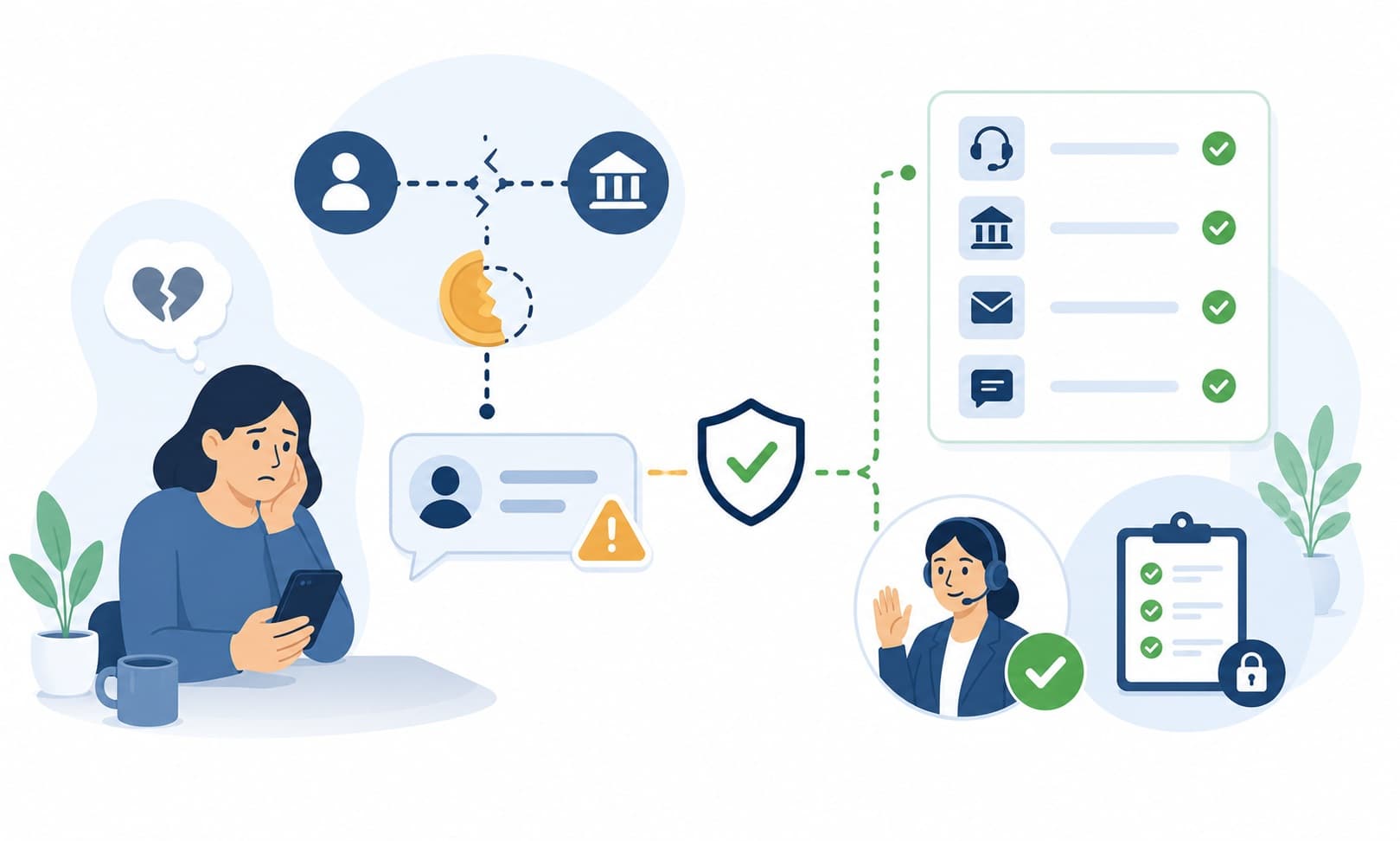
A recovery scam often appears after someone has already been hurt, embarrassed, or worried. A person may say they can recover lost money, trace a payment, unlock an account, remove a harmful post, or get funds back from a previous scam. The message may feel comforting because it offers control at a painful moment. That is what makes recovery scams especially unfair. They use hope and urgency when someone may be tired, ashamed, or desperate for help.
A safer response is to keep recovery claims inside official channels. Contact the bank, payment app, marketplace, employer, agency, or platform involved through a known website, app, or phone number. No private helper should need your password, one-time code, wallet access, or upfront fee to prove they can help. It is okay to ask for support from a trusted person before responding. You are not at fault for wanting the problem fixed.
What this scam looks like
A recovery scam may come through social media, search results, comments, direct messages, email, or follow-up calls. The person may claim to be a refund specialist, investigator, hacker, broker, support agent, lawyer, or recovery expert. They may use confident language and say they have helped many victims before.
Some recovery scammers find people who posted about a loss online. Others are connected to the original scam and contact the person again under a new identity. They may ask for fees, deposits, account access, private documents, or payment details. A major warning sign is a promise that money or accounts can definitely be recovered if you pay.
Common examples
- A social media account promises to recover money from a previous scam for a fee.
- A fake support agent says they can reverse a payment if you share account access.
- A person claims they can recover cryptocurrency with special tracing tools.
- A caller says a refund is available but you must pay processing costs first.
- A message says your stolen account can be restored if you provide a one-time code.
- A comment under a scam-warning post recommends a private recovery expert.
- A person says not to contact official support because only they can help.
How to verify safely
- Start with the official bank, payment app, platform, marketplace, or agency involved.
- Do not trust recovery claims made in comments, direct messages, or search ads without official verification.
- Be cautious of any promise that recovery is guaranteed.
- Do not share passwords, codes, wallet keys, or account access with a private recovery contact.
- Ask whether the person is asking you to pay before any official confirmation exists.
- Talk with a trusted person before responding to recovery offers.
- Use the site's /reporting page to find general reporting options instead of relying on private helpers.
Warning signs
- Someone promises they can recover money, accounts, crypto, or property if you pay first.
- The person claims to have special contacts, secret tools, or guaranteed results.
- You are contacted soon after a loss by someone who already knows details of what happened.
- The helper asks for upfront fees, private account access, passwords, or new payments.
- You are told not to contact your bank, platform, or official reporting channels.
- The person uses your stress, embarrassment, or hope to keep you engaged.
Questions to ask
- Did this person contact me first after I had a problem?
- Are they asking for money before doing anything verifiable?
- Can their claims be checked through an official bank, platform, or agency channel?
- Are they promising a result that no one can honestly guarantee?
- Have I talked to a trusted person before responding?
Safer next steps
- Pause before paying anyone who promises recovery after a scam or loss.
- Contact the relevant bank, platform, employer, or agency through an official channel.
- Use official support and reporting channels rather than private recovery offers.
- Do not share passwords, one-time codes, wallet details, or account access with a recovery contact.
- Save messages and payment requests for your records.
- Ask a trusted person to help you review any recovery claim before acting.
What to do if you already clicked, paid, or shared information
- Stop sending money, codes, documents, or account access to the recovery contact.
- Contact the relevant bank, platform, employer, or agency through an official channel.
- If you paid the recovery contact, contact the payment provider through official support to ask about available options.
- If you shared login or account information, use the official platform's account support or settings to review your options.
- Save recovery messages, profiles, payment details, and any claims they made.
- Tell a trusted person what happened so you do not have to handle follow-up pressure alone.
- Be cautious of a second person who claims they can recover money from the first recovery scam.
How to report it
- Report the recovery account, message, ad, or comment on the platform where it appeared.
- Report suspicious payments through the bank, card provider, or payment app used.
- Use official consumer-protection or fraud-reporting channels in your region.
- Report impersonation to the real company or agency if a known name was used.
- Visit the site's /reporting page for general reporting options.
Common questions
What should I do if someone says they can recover my money?
Pause before paying or sharing access. Contact the bank, payment app, platform, or agency involved through an official channel first.
How can I tell if a recovery service is safe?
Be cautious of guarantees, upfront fees, private messages, and requests for passwords, codes, wallet access, or account control.
Why did someone contact me after I posted about being scammed?
Scammers often look for people who are already stressed or seeking help. Treat unsolicited recovery offers as unverified.
Should I pay a fee to get my money back?
Do not rush. Verify through official bank, platform, or agency channels before considering any payment related to recovery.
What should I do if I already paid a recovery helper?
Stop contact, save the messages and payment records, and contact the payment platform or bank through an official channel.